
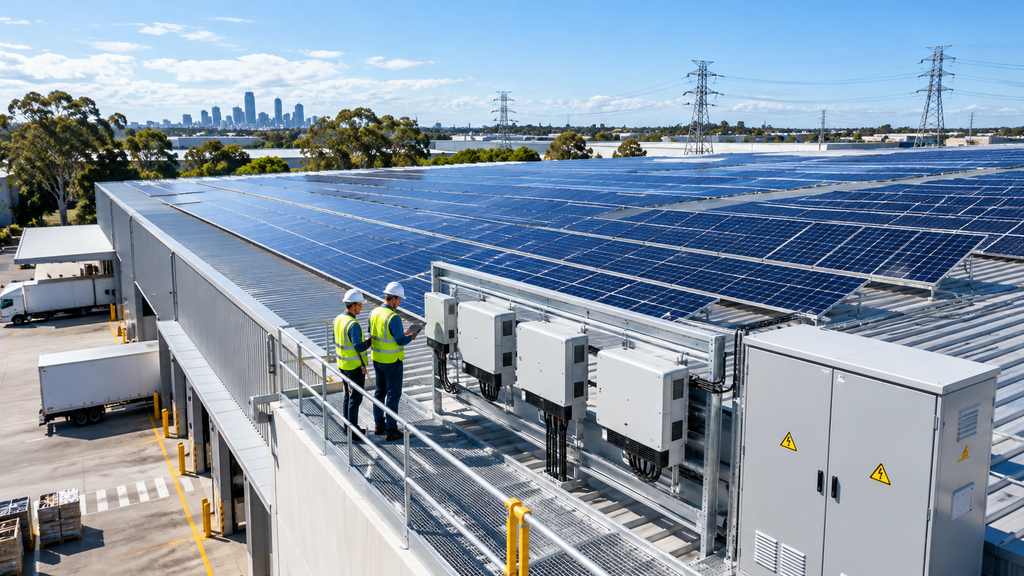
On 30 October, RenewEconomy framed Australia’s next rooftop solar and storage phase as an “80 GW opportunity.”
The policy change behind that discussion is significant. From 1 October 2026, Australia’s Small-scale Renewable Energy Scheme expanded solar eligibility from 100 kW to 1 MW, bringing larger warehouse, factory, farm and community projects into the STC framework.
80 GW is technical potential, not an installation target
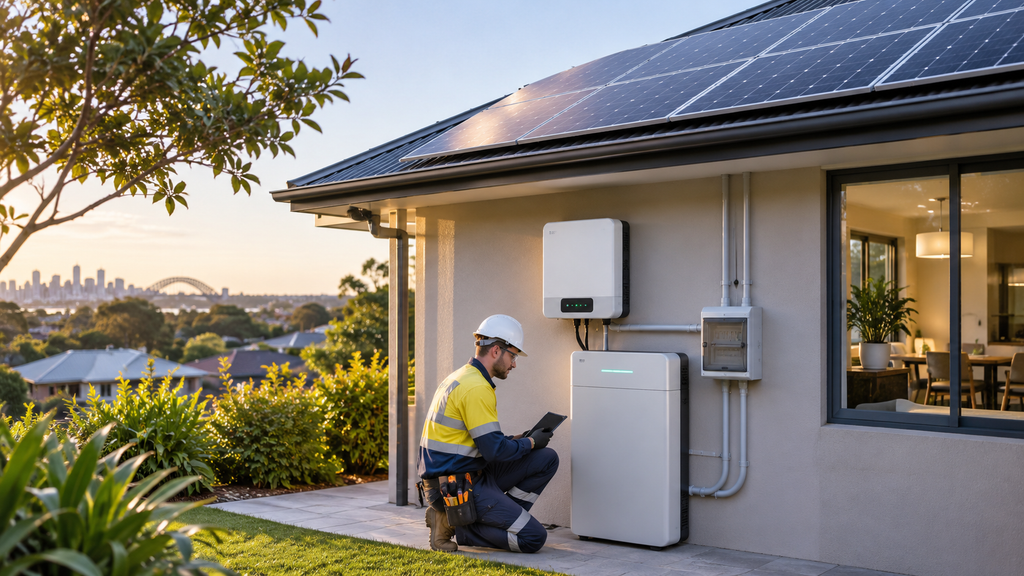
IEEFA estimates that Australia currently has around 5.6 GW of commercial and industrial rooftop solar.
Its updated modelling suggests approximately 39 GW of technical rooftop potential across commercial/business and industrial/utilities zones. When rural and primary-production areas are included, the figure rises to about 85.6 GW.
That puts the “80 GW” figure in context. It is closer to an upper estimate of technical rooftop PV potential than a government deployment target. It is also not an 80 GW battery market.
For solar systems above 100 kW and up to 1 MW, the expanded SRES now provides STCs using a fixed five-year deeming period. The Australian Government says the change could reduce upfront costs for larger rooftop systems by around 20%.
Battery support is a separate policy
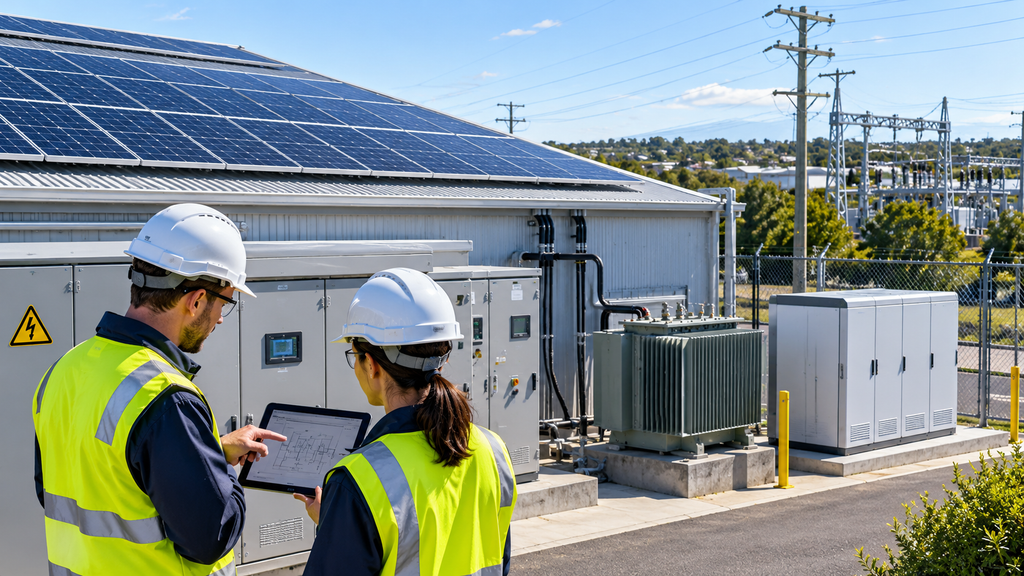
Australia’s Cheaper Home Batteries Program operates under different rules.
Eligible batteries have nominal capacities between 5 kWh and 100 kWh and must be connected to solar. STCs are available for the first 50 kWh of usable battery capacity.
The government expanded the expected program budget from A$2.3 billion to approximately A$7.2 billion. It expects the scheme to support more than two million Australians installing batteries by 2030 and deliver around 40 GWh of additional storage capacity.
Demand has already responded. During Q2 2026, 111,000 battery installations representing 3.6 GWh were approved under the program. The first half of the year also saw 1.89 GW of rooftop solar and approximately 276,000 home batteries installed.
Grid connection may become the next bottleneck
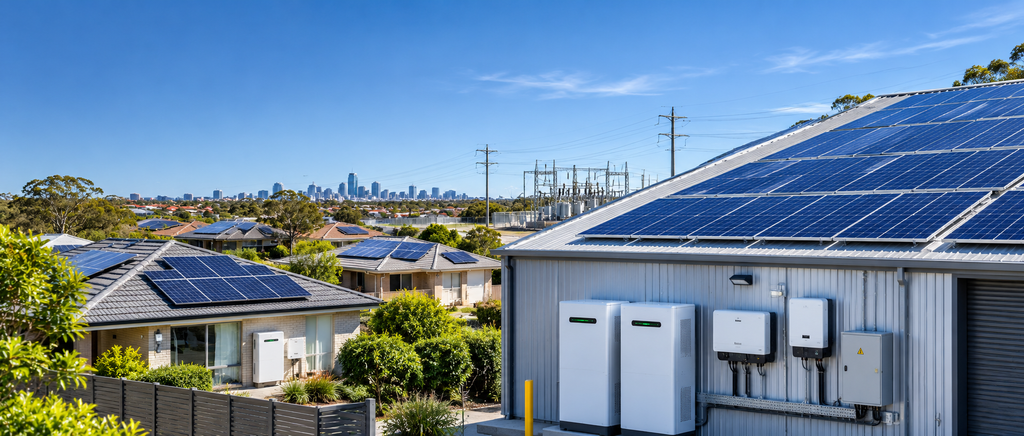
Lower capital cost does not automatically turn technical potential into bankable projects.
The Clean Energy Regulator notes that projects in the 100 kW–1 MW segment can take at least eight months to move from design through approval. Mid-scale installations also require additional engineering and connection documentation, including structural reports, single-line diagrams and grid connection agreements.
That distinction matters for storage and EMS suppliers.
As larger commercial rooftops adopt solar, batteries should not simply be added as a standard accessory. Storage economics depend on daytime load, demand charges, export constraints, dynamic tariffs and the site’s network connection.
The real opportunity is therefore not a generic “80 GW solar-plus-storage market.” It is the conversion of previously marginal commercial rooftops into investable energy projects.
Companies that can combine PV engineering, grid connection, battery sizing and EMS optimisation are likely to capture more value than suppliers competing on hardware price alone.